







How do I breathe?
The exchange of gases, or 'breathing', is a process that is carried out through the respiratory system, a set of organs that make up the two airways (Figure 1): the upper (nose, pharynx, larynx) and the lower (trachea, bronchi and lungs). As a process, it is divided into two phases: inhalation, during which the oxygen in the atmospheric air is taken up, and exhalation, where the carbon dioxide accumulated in the human body as a product of cellular metabolism is eliminated. During inhalation, the atmospheric air follows a specific path, moving successively from the nose (nasal cavity) to the alveoli of the lungs, and vice versa during exhalation. The alveoli are small grape-like structures within the lungs that are 'surrounded' by a network of small blood-filled vessels called pulmonary capillaries. Between the wall of the alveoli and the pulmonary capillaries is the so-called respiratory membrane, a structure through which this exchange of oxygen and carbon dioxide takes place (Figure 2). Any cause that has the potential to disturb the execution of the above phases can lead to a disturbance of the normal function of respiration.
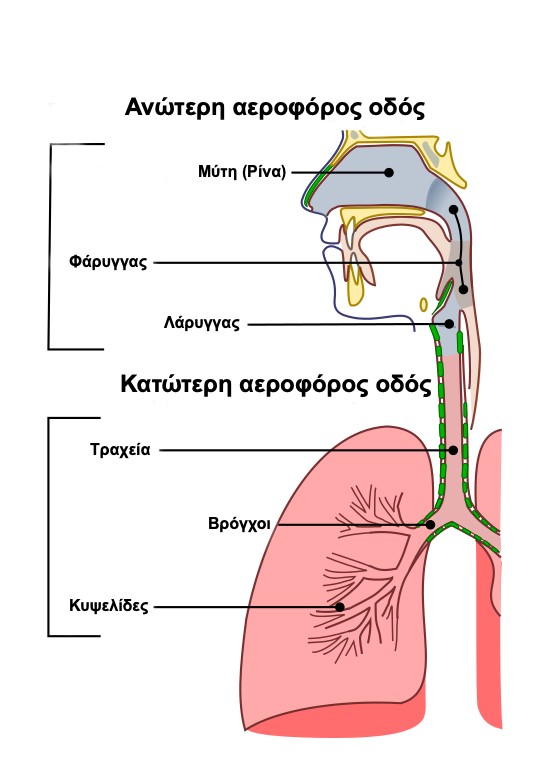 Figure 1
 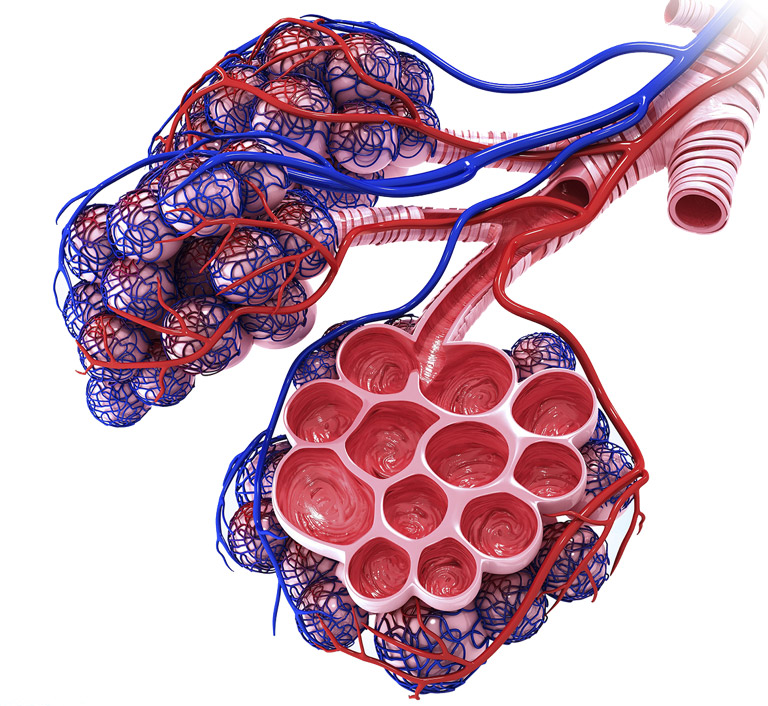 Figure 2



 by:
by: